
What Are the Most Effective Interview Strategies for Law Firms?
Hiring at a law firm isn’t like hiring anywhere else. The stakes are high, the roles are specialized, and a bad hire can cost your firm months of lost productivity. That’s why your interview process can’t be a formality. It needs to be intentional, consistent, and built around the kind of talent your firm actually needs to grow.
Key Takeaways
- Defining the role clearly before interviews begin reduces inconsistent questions and misaligned evaluations.
- Structured interviews with pre-set questions ensure every candidate gets a fair and comparable assessment.
- Behavioral questions reveal how a candidate performs under pressure, not just how well they interview.
- Remote interview preparation matters just as much as in-person prep, since technical issues can obscure real talent.
- Following up with candidates after a final decision, regardless of the outcome, protects your firm’s reputation.
Your Playbook for Interviewing Legal Candidates for Your Law Firm & Legal Department
Start With a Clear Picture of What You Need
Before you schedule a single interview, get clear on what the role actually demands. Many law firms start the process without a shared definition of success for the position, and the results show. Your panel ends up asking inconsistent questions and evaluating candidates on different criteria, which makes any fair comparison nearly impossible.
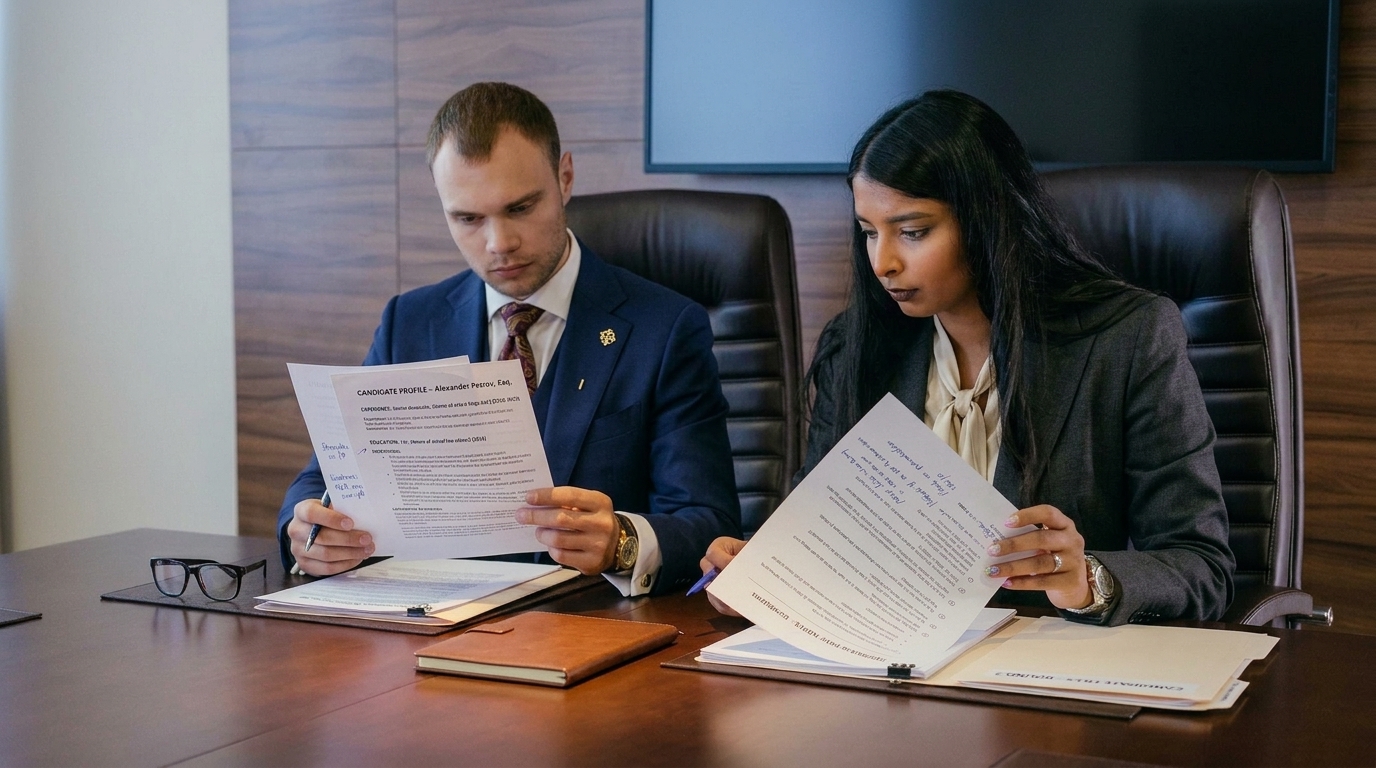
Think carefully about the technical skills required, the soft skills that fit your firm’s culture, and the actual day-to-day work the person will own. A well-built playbook interviewing legal candidates starts with an agreed-upon candidate profile before anyone steps into a conversation. That clarity also saves time by filtering out mismatched applicants early and keeping your focus on people who can genuinely do the job.
Use Structured Interviews to Stay Consistent
One of the most common mistakes in legal hiring is letting each interviewer run their own version of the conversation. Without structure, you end up with competing opinions rather than real evaluations. Structured interviews use a pre-set list of questions that every candidate answers, keeping comparisons fair and decisions more defensible.
Structured interview techniques have consistently outperformed unstructured conversations when it comes to predicting job performance. Pairing that consistency with behavioral interview questions gives you a clearer picture of how someone actually operates under pressure. Instead of asking what a candidate would do, you ask what they did. That shift in framing makes a real difference when you’re hiring for roles that don’t leave room for on-the-job learning.
Score each response against a defined rubric, and take time to calibrate your interviewers before the process begins. This limits the influence of personal bias and gives your panel a shared standard for evaluating every candidate they meet.
Prepare Your Interviewers, Not Just Your Questions
A solid question bank won’t help if your interviewers don’t know how to use it well. Legal professionals in hiring roles are skilled in their practice areas, but they don’t always have formal training in what makes a good interview. That gap tends to show up in how they listen, probe, and evaluate, and it quietly shapes every hiring decision they’re part of.
Asking yourself whether is your interview process a nightmare from the candidate’s point of view is a useful exercise most firms skip. Brief your team on what to listen for, how to take notes that are actually useful, and which topics to sidestep for compliance reasons. Even a short prep session before a round of interviews can sharpen your panel’s evaluations noticeably.
Humanize the Process Without Lowering Your Standards
Legal hiring is formal by nature, and that formality can push strong candidates toward firms that make them feel more welcome. Top performers, especially those who are already employed and only passively open to new opportunities, have no reason to tolerate a cold or disorganized experience.
Humanizing the interview process doesn’t mean dropping your standards. It means giving candidates an honest look at your culture, introducing them to the people they’d actually work alongside, and communicating at every step without being asked. Let candidates know what to expect, follow through on timelines, and treat their time as worth respecting. That experience follows your firm’s name in the market long after the interview ends.

Adapt for Remote and Hybrid Interviews
Remote interviews are a standard part of legal hiring now, but many firms still treat them as a lighter version of in-person conversations. Video brings its own challenges, from connection issues to the loss of natural rapport, and it takes deliberate preparation to run one well. Treating it as an afterthought shows, and candidates notice.
Taking the time to elevate your video interviews goes beyond having a clean background on screen. It means structuring the conversation so that what’s lost without physical presence is made up for in intentionality. Ask follow-up questions more actively, give candidates a moment to settle in at the start, and confirm your technology ahead of time. Those details signal professionalism and help candidates get an accurate read on your team.
Close the Loop With Candidates
This step gets skipped more often than any other. After interviews wrap up, many firms go quiet, especially with candidates they’re not moving forward. Legal communities are tight, and a poor post-interview experience doesn’t stay private. That silence sends a message about your firm whether you intend it to or not.
A short, respectful message to a declined candidate takes only minutes and leaves a good impression. For candidates you’re actively considering, prompt communication is just as important. Delays signal the role isn’t a priority, and strong people won’t wait long.
If your firm is ready to sharpen its hiring process and bring in stronger legal talent, explore how C&M Legal Search can help your team hire smarter with a strategic recruitment partnership built around your actual needs.
Getting the Process Right Makes the Difference
An effective interview strategy for a law firm comes down to preparation, structure, and genuine respect for the people you’re evaluating. When every step is handled with intention, from building the candidate profile upfront to sending the final follow-up, you’re far more likely to make hires that actually last. Firms that invest in this kind of discipline tend to fill roles faster, reduce costly re-hires, and build teams that hold together over time.