5 Tips to Enhance Your LinkedIn Profile
In today’s competitive professional world, LinkedIn has evolved far beyond a simple online resume. It has become a powerful platform for networking, personal branding, career growth, recruiting, and business development. Whether you are searching for a new job, building authority in your industry, attracting clients, or expanding your professional network, having a polished LinkedIn profile is essential.
Recruiters, hiring managers, and business professionals often use LinkedIn as their first impression of a candidate or company representative. A weak or incomplete profile can cause missed opportunities, while a strategically optimized profile can help position you as an industry expert.
The good news is that improving your LinkedIn profile does not require complicated strategies. With a few targeted enhancements, you can significantly increase profile visibility, engagement, and professional credibility.
Below are five proven strategies to help you create a LinkedIn profile that connects you with the right opportunities in today’s crowded professional marketplace.
Key Takeaways
- A professional profile picture dramatically improves profile views and credibility
- Your headline should include industry keywords and showcase your expertise
- A compelling summary helps tell your professional story and attract opportunities
- Experience sections should focus on measurable achievements, not just job duties
- Skills and endorsements strengthen your authority and search visibility
- Regularly updating your LinkedIn profile keeps you competitive in your industry
- LinkedIn is not just for job seekers. It is also valuable for networking and business growth
- Strong LinkedIn optimization can improve recruiter outreach and client inquiries
Why Your LinkedIn Profile Matters More Than Ever
LinkedIn has become one of the most influential professional networking platforms in the world. Millions of recruiters, executives, business owners, and decision-makers actively search LinkedIn every day to find talent, establish partnerships, and identify industry experts.
A strong LinkedIn presence can help you:
- Build professional credibility
- Attract recruiters and employers
- Generate business opportunities
- Expand your network
- Showcase your accomplishments
- Position yourself as an authority in your field
- Increase career advancement opportunities
Your profile acts as your digital first impression. Because of this, every section should be strategically optimized to communicate professionalism, expertise, and authenticity.
Related: 5 Tips to Enhance Your LinkedIn Profile
1. Choose a Professional LinkedIn Profile Picture
Why Your Profile Picture Is Important
Your profile photo is one of the first things people notice when visiting your LinkedIn page. Research consistently shows that profiles with professional photos receive significantly more engagement, profile views, and connection requests.
An effective LinkedIn profile photo instantly communicates professionalism and trustworthiness. Since LinkedIn is a professional platform, your image should align with your industry and career goals.
Best Practices for LinkedIn Profile Photos
Use a High-Quality Headshot
Choose a clear, professional-looking headshot with good lighting and high resolution. Avoid blurry or pixelated images.
Dress Professionally
Wear attire that matches your profession or industry expectations. Business casual or professional clothing typically works best.
Keep the Background Simple
A clean and uncluttered background helps keep the focus on you.
Smile and Look Approachable
A warm and confident expression can make your profile feel more inviting and authentic.
Avoid Distracting Elements
Do not use group photos, cropped party pictures, or overly filtered images.
Common LinkedIn Photo Mistakes to Avoid
- Using outdated photos
- Wearing sunglasses
- Poor lighting
- Over-editing with filters
- Using casual vacation photos
- Cropping other people out of pictures
Your profile photo should communicate confidence, professionalism, and authenticity.
2. Optimize Your LinkedIn Headline
Why Your Headline Matters
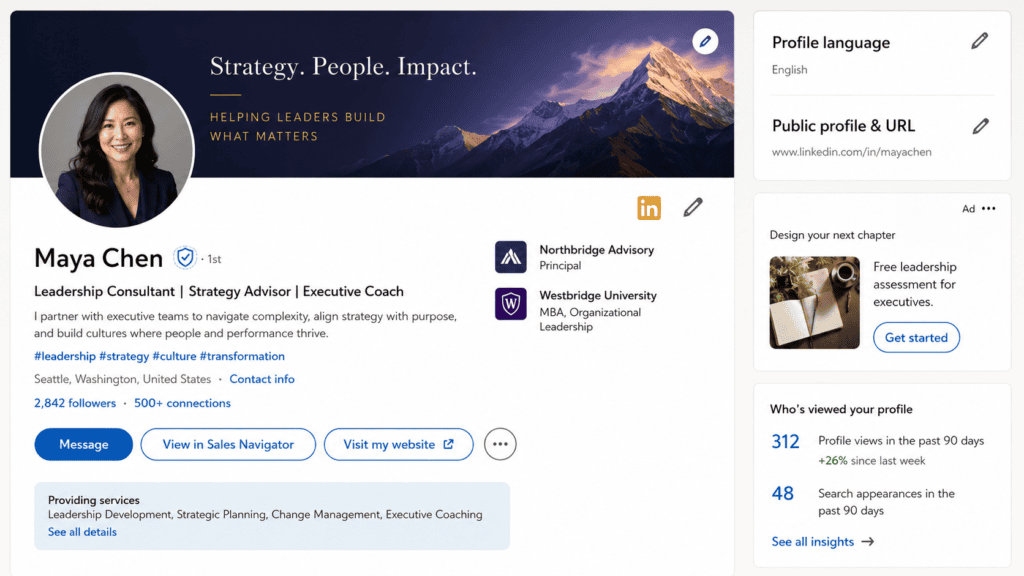
Your LinkedIn headline appears directly beneath your name and is one of the most visible sections of your profile. By default, LinkedIn fills this section with your current job title and company. However, leaving it unchanged is a missed opportunity.
A strategically written headline can help improve your visibility in LinkedIn search results. Investing time in linkedin profile optimization is one of the simplest ways to get your profile in front of more recruiters.
How to Create a Strong LinkedIn Headline
Include Relevant Industry Keywords
Recruiters often search LinkedIn using keywords. Including industry-specific phrases can improve your discoverability.
For example:
- Digital Marketing Specialist
- Corporate Attorney
- Healthcare Recruiter
- Data Analyst
- SaaS Sales Executive
Highlight Your Expertise
Showcase your specialties, strengths, or areas of focus.
Examples:
- Helping Businesses Grow Through SEO & Paid Ads
- Experienced Legal Recruiter Connecting Top Talent
- Healthcare Marketing Expert Focused on Patient Growth
Make It Compelling
Your headline should encourage people to click your profile.
Instead of: “Marketing Manager”
“Digital Marketing Manager Helping Brands Increase Revenue Through SEO & Paid Advertising”
Headline Formula Example
Job Title + Specialty + Value Proposition
“Financial Consultant | Retirement Planning Specialist | Helping Families Build Long-Term Wealth”
Why Keywords Matter
Using relevant keywords helps LinkedIn’s algorithm understand your expertise. This can increase visibility when recruiters or professionals search for individuals with your skills.
A keyword-optimized headline can significantly improve profile discoverability.
3. Write a Compelling LinkedIn Summary
What Is the LinkedIn Summary Section?
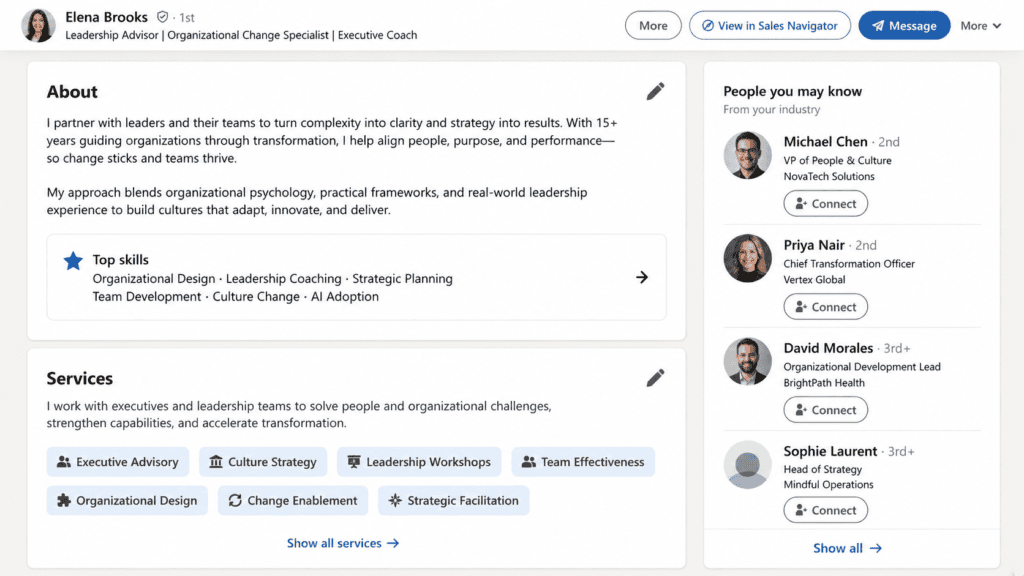
Your LinkedIn summary, also known as the “About” section, gives you the opportunity to tell your professional story in your own words.
This section should go beyond listing job responsibilities. Instead, it should communicate:
- Your experience
- Your accomplishments
- Your personality
- Your values
- Your professional mission
For legal professionals especially, the summary is also a great place to reinforce your positioning. Consistent work on developing a personal brand starts with how you present yourself in spaces like LinkedIn, where your first impression is often your only one.
How to Write an Effective Summary
Start With a Strong Opening
Your first few lines should capture attention immediately.
“I am passionate about helping businesses grow through innovative digital marketing strategies that drive measurable results.”
Share Your Experience
Discuss your professional background, industry expertise, and accomplishments.
Highlight Achievements
Whenever possible, include measurable results.
Examples:
- Increased website traffic by 300%
- Generated six-figure revenue growth
- Managed multimillion-dollar campaigns
- Helped recruit top legal talent nationwide
Include Industry Keywords
Using relevant keywords improves your visibility in LinkedIn search results.
Show Personality and Passion
People connect with authenticity. Share what motivates you professionally.
End With a Call to Action
Encourage networking opportunities or professional connections.
“Feel free to connect with me to discuss digital marketing, business growth, and collaboration opportunities.”
If you’re a legal professional looking to take the next step in your career, submit your profile to C&M Legal Search and connect with recruiters who specialize in placing top-tier legal talent.
Related: Crafting an Effective Elevator Pitch Making a Memorable Impression
4. Strengthen Your Experience and Education Sections
Why These Sections Matter
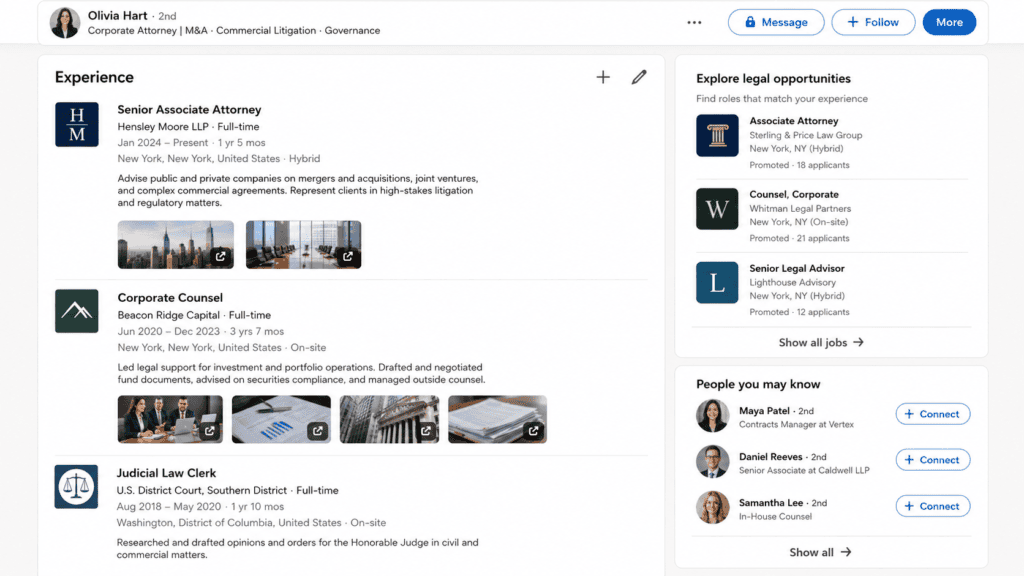
Your experience and education sections act as your professional portfolio. These areas help establish credibility and showcase your career progression.
A common mistake people make is simply listing job duties. Instead, focus on demonstrating impact and accomplishments.
This matters more than you might think. Knowing how to stand out as a legal candidate often comes down to the details in these two sections, so it pays to be specific and results-driven.
How to Optimize Your Experience Section
Focus on Results
Rather than saying: “Managed social media accounts”
Try: “Managed multi-platform social media campaigns that increased engagement by 45%.”
Use Bullet Points
Bullet points improve readability and help visitors quickly scan information.
Include Metrics
Numbers make accomplishments more credible and impactful.
Examples:
- Increased sales by 30%
- Reduced operational costs by 20%
- Generated 500+ qualified leads
- Improved client retention rates
Highlight Major Projects
Mention significant campaigns, initiatives, or leadership experiences.
Keep Information Current
Ensure dates, job titles, and descriptions are accurate and aligned with your resume.
How to Improve Your Education Section
Your education section should include:
- Degrees
- Certifications
- Relevant coursework
- Honors or awards
- Professional training
If applicable, you can also mention leadership activities, organizations, or volunteer experiences.
Certifications Matter
Professional certifications can significantly improve credibility.
Examples include:
- Google Analytics Certification
- PMP Certification
- HubSpot Certifications
- SHRM Certification
- AWS Certifications
Adding certifications demonstrates continued professional growth and commitment to learning.
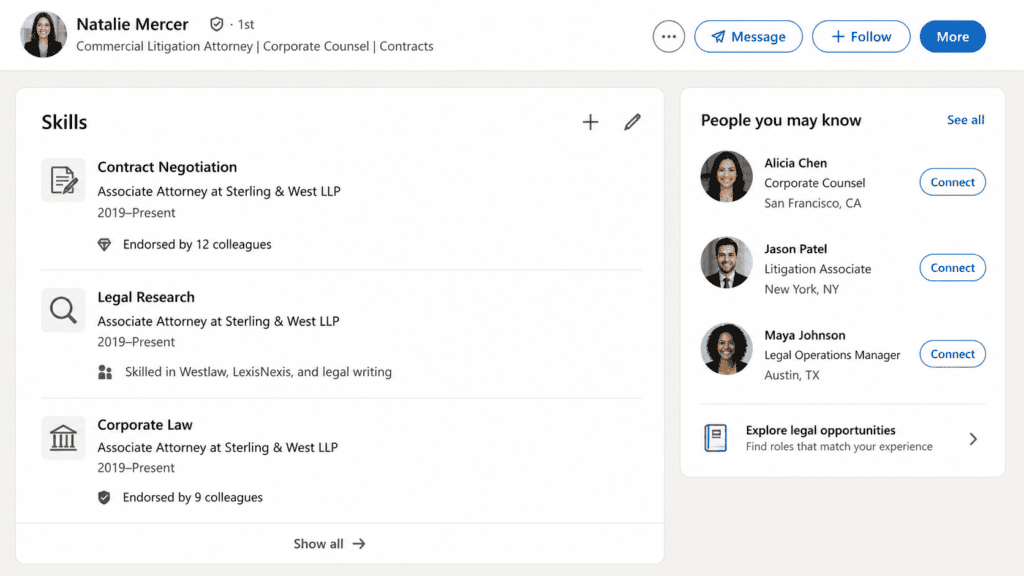
5. Maximize Skills and Endorsements
Why Skills Matter on LinkedIn
The skills section plays an important role in LinkedIn’s search algorithm. Recruiters often search candidates based on specific skills.
Additionally, endorsements from colleagues and professional connections help reinforce credibility.
Legal professionals who take time to build optimized linkedin profiles consistently report higher recruiter engagement. A fully built-out skills section is a big part of that.
Best Practices for LinkedIn Skills
Add Relevant Skills
Focus on skills aligned with your career goals and expertise.
Examples:
- SEO
- Project Management
- Leadership
- Healthcare Marketing
- Contract Negotiation
- Data Analysis
Prioritize Your Top Skills
LinkedIn allows you to pin top skills. Choose the most important ones strategically.
Keep Skills Updated
Industries evolve constantly. Refresh your skills periodically to stay relevant.
The Importance of Endorsements
Endorsements provide social proof and validate your expertise.
While endorsements alone will not guarantee opportunities, they can strengthen your overall profile credibility.
How to Gain More Endorsements
Engage With Your Network
Active networking often leads to more endorsements naturally.
Endorse Others
People frequently reciprocate endorsements.
Ask Trusted Colleagues
You can politely ask coworkers or professional contacts to endorse your top skills.
Additional Ways to Improve Your LinkedIn Presence
Stay Active on LinkedIn
Posting content regularly can increase visibility and engagement.
You can share:
- Industry insights
- Career advice
- Professional achievements
- Company updates
- Thought leadership content
Build a Strong Network
Connect strategically with professionals in your industry. Applying proven networking strategies for the legal field can open doors that a profile update alone cannot.
Quality networking often leads to valuable opportunities.
Customize Your LinkedIn URL
A personalized LinkedIn URL appears more professional and is easier to share.
Example: linkedin.com/in/johndoe
Request Recommendations
Written recommendations from colleagues or clients can significantly strengthen your credibility.
Engage With Industry Content
Commenting thoughtfully on industry posts can increase profile visibility and demonstrate expertise. For lawyers specifically, following linkedin profile tips for lawyers can help tailor your presence to what legal recruiters and clients are actually looking for.
Common LinkedIn Mistakes to Avoid
Incomplete Profiles
An unfinished profile can appear unprofessional.
Generic Headlines
Avoid vague headlines that fail to communicate value.
Keyword Stuffing
Overloading your profile with repetitive keywords can appear unnatural.
Outdated Information
Keep your experience, certifications, and accomplishments current.
Lack of Professionalism
Ensure your profile reflects your career goals and industry standards.
The Long-Term Benefits of LinkedIn Optimization
A strong LinkedIn profile can create opportunities long after you finish optimizing it.
Benefits include:
- Increased recruiter outreach
- Better networking opportunities
- Enhanced professional reputation
- Improved job prospects
- More speaking opportunities
- Greater business visibility
- Higher authority in your industry
LinkedIn is no longer optional for professionals. It is a critical component of modern career development and professional branding.
Whether you’re actively hiring or looking for your next placement, the team at C&M Legal Search can help. Explore the full range of legal staffing solutions they offer and find the right fit for your team or your career.
Conclusion
Optimizing your LinkedIn profile is one of the smartest investments you can make in your professional future. A polished profile not only helps you attract recruiters and employers, but also strengthens your credibility, visibility, and networking potential.
From selecting a professional profile photo to crafting a compelling summary and showcasing measurable achievements, every section of your LinkedIn profile contributes to your personal brand.
The most successful LinkedIn profiles are authentic, keyword-optimized, regularly updated, and focused on delivering value. By implementing these strategies, you can position yourself for long-term professional success and create more opportunities in your career.

Frequently Asked Questions (FAQs)
1. Why is LinkedIn important for professionals?
LinkedIn helps professionals network, build credibility, attract recruiters, and discover career opportunities.
2. How often should I update my LinkedIn profile?
You should update your profile regularly, especially after promotions, certifications, major projects, or career changes.
3. What makes a good LinkedIn headline?
A strong headline includes relevant keywords, highlights expertise, and clearly communicates your value proposition.
4. Should I include keywords in my LinkedIn profile?
Yes. Including industry-specific keywords improves visibility in LinkedIn search results.
5. How long should my LinkedIn summary be?
Your summary should be concise yet detailed enough to showcase your experience, accomplishments, and personality.
6. Do LinkedIn endorsements matter?
Yes. Endorsements provide social proof and help validate your professional skills.
7. What type of profile picture works best on LinkedIn?
A professional, high-quality headshot with good lighting and a clean background is ideal.
8. Should I add certifications to LinkedIn?
Absolutely. Certifications enhance credibility and demonstrate continued professional development.
9. Can LinkedIn help business owners too?
Yes. LinkedIn is valuable for networking, lead generation, brand building, and establishing industry authority.
10. How can I increase visibility on LinkedIn?
Optimize your profile with keywords, stay active, engage with industry content, and consistently grow your network.