
The Legal Candidate’s Guide to Smart Job Switches
Making a career move in the legal industry is a major decision. Whether you’re an attorney, paralegal, compliance professional, or legal operations specialist, changing firms or legal departments can significantly affect your long-term career trajectory, income potential, and work-life balance.
The legal profession is highly competitive, and while a new opportunity may seem attractive on the surface, it’s worth looking deeper before making the leap. A higher salary or prestigious title doesn’t always translate into greater job satisfaction or career fulfillment. That’s why legal professionals should carefully weigh every aspect of a potential role before accepting an offer.
This guide covers the most important factors legal candidates should consider when evaluating a new opportunity, from compensation and advancement opportunities to workplace culture and professional development.
Key Takeaways
- Evaluate long-term career growth before accepting a new legal position.
- Research the firm’s culture, leadership, and employee satisfaction.
- Consider work-life balance and remote work flexibility.
- Review the entire compensation package, not just salary.
- Analyze the firm’s financial stability and reputation.
- Ensure the new role aligns with your long-term professional goals.
- Look for mentorship, training, and continuing legal education opportunities.
- Consider how a new geographic location could affect your lifestyle.
- Prioritize firms that support diversity, inclusion, and collaboration.
- Conduct thorough due diligence before making a career transition.
Why Legal Professionals Change Jobs
Legal professionals switch jobs for many reasons. Some seek higher compensation, while others pursue better work-life balance, career advancement, or more meaningful work. Today’s legal candidates increasingly prioritize flexibility, firm culture, and professional fulfillment over prestige alone.
Common reasons legal candidates make a move include:
- Limited advancement opportunities
- Burnout from excessive workloads
- Poor leadership or toxic workplace culture
- Desire for remote or hybrid work
- Better compensation and benefits
- Career specialization opportunities
- Relocation to a different city or state
- Interest in transitioning from law firm to in-house counsel roles
These motivations are all valid, but it’s important to approach any career move strategically so you don’t end up trading one set of problems for another.
Related: Exploring Legal Support Staff Hiring Trends in Demand Markets and Growing Practice Areas
Evaluating Career Advancement Opportunities
One of the most important things to consider when changing legal jobs is future career growth. A role with limited advancement potential can cap your earning potential and slow your professional development over time.
Understand the Promotion Structure
Before accepting a role, ask pointed questions about how advancement actually works within the organization. You want to understand the partnership track, how long promotions typically take, what metrics are used to evaluate performance, and whether leadership roles are realistically accessible. A good employer will be transparent about career progression expectations from the start.
Look Beyond the Job Title
A prestigious title is appealing, but what matters more is the actual scope of responsibilities and real growth potential tied to the role. A smaller title at a growing firm can open more doors than a senior title at a stagnant one.
Assess Professional Development Support
Top legal employers invest in their people. Look for firms that offer continuing legal education (CLE) programs, leadership training, mentorship, trial advocacy support, and business development coaching. Organizations that prioritize professional growth tend to attract and keep stronger talent over the long run.
Staying current on legal staffing trends can also help you identify which firms are investing in talent development versus those that are falling behind.

The Importance of Work-Life Balance in the Legal Industry
The legal profession has long been tied to long hours, demanding clients, and high stress. More legal professionals are now actively prioritizing healthier work-life balance when weighing new opportunities, and that’s not a sign of weakness. It’s smart.
Evaluate Billable Hour Expectations
Excessive billable hour requirements are one of the biggest drivers of burnout in law firms. Before you move, find out the annual billable hour expectations, whether weekend work is required, on-call responsibilities, and how workloads fluctuate during trials or major deals. A higher salary may not be worth what you’re giving up in terms of physical and mental well-being.
Remote and Hybrid Work Policies
Flexible work arrangements have become a significant factor in legal hiring decisions. Some firms offer hybrid schedules or fully remote options, while others require full-time office presence. Ask directly: Is remote work permitted? How often are you expected in the office? Are flexible schedules an option? Does the firm support working parents and caregivers?
Research shows that the adoption of hybrid work models is reshaping how law firms attract and retain talent. Workplace flexibility consistently improves job satisfaction and reduces stress.
Preventing Burnout
Burnout is a real and serious issue in the legal field. Warning signs of an unhealthy workplace include excessive turnover, unrealistic workload expectations, a lack of support staff, constant after-hours communication, and employees who rarely take vacation. A healthy legal work environment actively encourages balance, not constant output.
If you’re trying to find a firm that genuinely supports your well-being and career goals, exploring C&M Legal Search’s full range of placement and staffing services is a good starting point.
Compensation and Benefits: Looking Beyond Salary
Compensation is often what drives the initial interest in a new role, but legal candidates should evaluate the entire compensation package, not just the base salary. Benefits can make a big difference in overall quality of life.
Review Total Compensation
A strong legal compensation package can include annual bonuses, profit-sharing, health and dental coverage, retirement plans with 401(k) matching, paid parental leave, tuition and CLE reimbursement, and wellness stipends. Sometimes a slightly lower salary offset by strong benefits and a better work environment leads to a better quality of life.
Understand Bonus Structures
When bonuses are offered, find out how they’re calculated, whether they’re tied to billable hours, how often they’re paid, and whether they’re discretionary or guaranteed. Transparency around compensation prevents surprises and disappointment.
Consider Long-Term Financial Growth
A role with slower initial compensation but strong advancement opportunities may ultimately be more financially rewarding. Think about where you want to be in five years, not just what the first paycheck looks like.
Related: The Future of Legal Jobs: Trends and Implications

Why Company Culture Matters
Firm culture has an outsized impact on your happiness and long-term success. Even highly compensated legal professionals can struggle if the workplace environment is toxic or misaligned with their values.
Assess Leadership Style
Strong leadership tends to create healthier and more productive work environments. During interviews, pay attention to how leadership communicates and engages with employees. Ask how management supports staff, whether feedback is encouraged, how conflicts are handled, and what employee retention looks like.
Collaboration vs. Competition
Some law firms are built on teamwork and shared success, while others thrive on internal competition. Neither is inherently wrong, but you need to know which environment fits your personality and career goals before you sign on.
Diversity and Inclusion
Many legal candidates now actively weigh diversity, equity, and inclusion when evaluating employers. Look for firms with diverse leadership, active employee resource groups, inclusive hiring practices, mentorship programs, and equal advancement opportunities. A diverse workplace typically leads to stronger collaboration and more resilient teams.
Understanding the benefits of utilizing legal recruiters can also help you find firms that align with your values without having to cold-apply across dozens of job boards.
Geographic Location and Lifestyle Considerations
Changing jobs can sometimes mean relocating to a different city or state. Geographic shifts affect more than just your commute. They can reshape your finances, your family’s routine, and your day-to-day life.
Cost of Living
A higher salary in a major city may not actually improve your financial situation if housing, taxes, transportation, and childcare costs are substantially higher. Research the full cost of living picture before getting excited about the number on an offer letter.
Commute and Quality of Life
Long commutes eat into personal time and add stress in ways that compound over months and years. Consider whether the office location actually fits the lifestyle you want to maintain.
Professional Market Opportunities
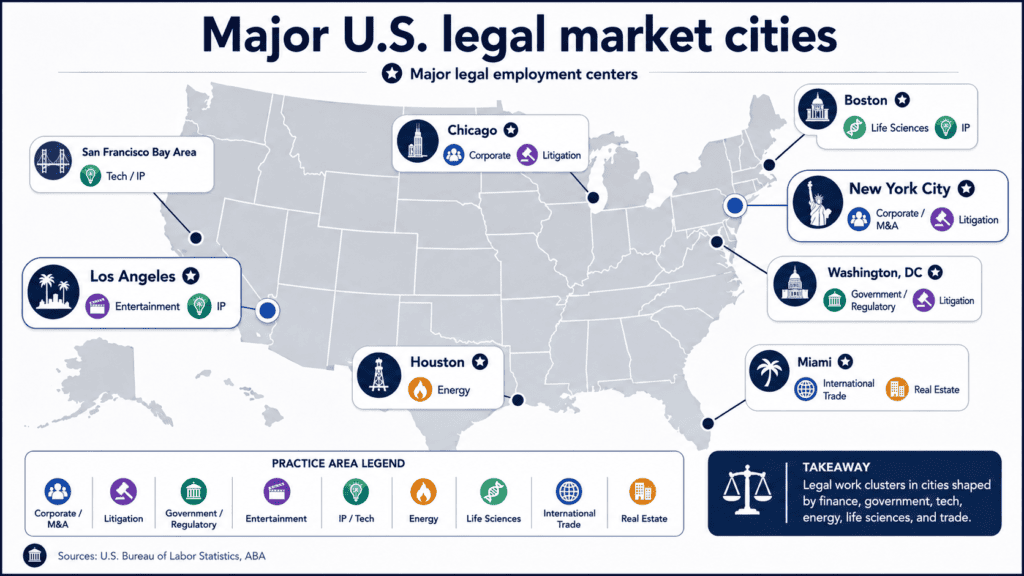
Certain cities carry stronger legal markets for specific practice areas, from corporate law and intellectual property to entertainment law, healthcare, and government affairs. Make sure the geographic market you’re moving into genuinely supports your long-term practice goals.
Assessing Job Security and Firm Stability
No legal position comes with a guarantee, which is why evaluating the stability of a prospective employer matters before you resign from your current role.
Research the Firm’s Reputation
Look at industry rankings, client reviews, news coverage, financial performance, and any recent leadership changes. A firm with a strong, consistent reputation typically signals long-term stability and real career growth potential.
Evaluate Employee Retention
High turnover is a red flag. Frequent departures often point to underlying issues with management, unrealistic workloads, or compensation that doesn’t match expectations.
Analyze Market Position
Ask yourself whether the firm is growing or contracting, whether it has a diversified client base, and whether there are recent signs of layoffs or mergers. Job security becomes especially critical during uncertain economic conditions, and firms with strong competitive positioning are generally better bets.
Law firms that have a deliberate approach to improving your law firm’s hiring strategy tend to be the ones that attract and retain top candidates over the long term. That’s the kind of environment worth seeking out.
Professional Development and Continuous Learning
The legal industry doesn’t stand still. Ongoing education isn’t just a nice-to-have. It’s a competitive necessity for staying relevant and moving your career forward.
Continuing Legal Education (CLE)
Look for employers that actively support attorney growth through CLE programs and professional training. Strong firms encourage industry certifications, legal conferences, trial training, and leadership development as ongoing priorities, not afterthoughts.
Mentorship Programs
Good mentorship accelerates growth in ways that on-the-job experience alone can’t match. An effective mentor provides career guidance, networking opportunities, business development advice, litigation strategy insights, and leadership coaching. If mentorship isn’t built into the culture, you may find yourself navigating a complex career without a map.
Cross-Functional Learning Opportunities
Some legal employers offer exposure to multiple practice areas or operational functions, which can be especially valuable if you’re considering a future transition into legal operations, compliance, risk management, healthcare administration, or corporate leadership.
Data on lateral hiring growth shows that professionals who diversify their skills and practice exposure early tend to command stronger compensation and more options later in their careers.

ALT Text: blonde woman sitting with her hands together
Questions Legal Candidates Should Ask Before Accepting an Offer
The interview process is a two-way evaluation. Asking the right questions signals preparation and helps you gather the information you actually need to make a solid decision.
Career Growth Questions
- What does advancement look like within the organization?
- How are employees evaluated for promotion?
- Are mentorship opportunities available?
Work-Life Balance Questions
- What are the expected working hours?
- Is remote work supported?
- What is the firm’s approach to employee wellness?
Compensation Questions
- How are bonuses structured?
- What benefits are included?
- Are CLE expenses covered?
Culture Questions
- How would you describe the firm culture?
- What qualities make employees successful here?
- How does leadership support professional growth?
The answers to these questions can tell you a lot about whether this is actually the right fit.
According to Robert Half’s legal hiring research, legal professionals who ask informed questions during the hiring process are more likely to land roles that match their expectations and career goals.
When you’re ready to connect with law firms, legal departments, or legal services providers that match your goals, the team at C&M Legal Search works directly with employers across the country to place qualified legal talent in roles built for long-term success.
Signs a Legal Job Opportunity May Not Be the Right Fit
A polished job posting and a smooth interview don’t always tell the whole story. Certain warning signs should give you pause before you sign anything.
- Vague or evasive answers about advancement opportunities
- Excessive turnover at the firm
- Unrealistic billable hour expectations
- Negative reviews from former employees
- Poor communication during the hiring process
- Lack of transparency about compensation
- Toxic or overly competitive workplace culture
Trust your instincts. If something feels off during the process, it usually is.

About C&M Legal Search
C&M Legal Search provides legal recruitment services for law firms, corporate legal departments, and legal service providers nationwide. The firm recruits attorneys, legal operations professionals, paralegals, and other legal talent while helping organizations build high-performing legal teams. Their approach centers on long-term relationships, strategic hiring, and personalized recruitment solutions.
Making a Strategic Career Move in the Legal Industry
Changing legal jobs isn’t simply about finding a higher paycheck. It’s about positioning yourself for long-term professional success, personal fulfillment, and career stability. The most effective career moves come from candidates who take the time to evaluate the full picture.
Think about career advancement opportunities, total compensation, work-life balance, firm culture, professional development, geographic fit, and long-term alignment. When all of those factors point in the same direction, you’re probably looking at the right move. A thoughtful transition today can shape the trajectory of your legal career for years to come.
Frequently Asked Questions
1. Why do legal professionals switch jobs?
Legal professionals often change jobs for better compensation, career advancement, work-life balance, flexibility, or improved workplace culture.
2. What should attorneys look for in a new law firm?
Attorneys should evaluate advancement opportunities, compensation, firm culture, workload expectations, and professional development support.
3. How important is work-life balance in the legal profession?
Work-life balance is extremely important because excessive stress and burnout are widespread in the legal industry.
4. What are common red flags when evaluating a legal employer?
High turnover, vague promotion structures, poor communication, unrealistic billable hour expectations, and toxic workplace culture are all worth taking seriously.
5. How can legal professionals evaluate firm culture?
You can assess culture through interviews, employee reviews, networking conversations, and your own observations during the hiring process.
6. What questions should candidates ask during legal interviews?
Ask about advancement opportunities, mentorship, workload expectations, compensation structure, and workplace flexibility.
7. Why is professional development important for attorneys?
Continuing education and mentorship help attorneys stay competitive, sharpen their skills, and move forward in their careers.
8. Should legal candidates prioritize salary over culture?
Not always. A healthy workplace culture and genuine career growth opportunities tend to contribute more to long-term job satisfaction than salary alone.
9. How can candidates research a law firm before accepting an offer?
Review industry rankings, employee reviews, firm news, LinkedIn profiles, and conversations with your professional network.
10. What is the biggest mistake legal candidates make when switching jobs?
Focusing only on salary without evaluating culture, advancement opportunities, workload, and long-term career fit is one of the most common and costly mistakes.