
How Has Remote Work Changed Legal Hiring?
The legal industry built its culture around physical presence. Law firms measured commitment in office hours, and face-to-face interaction was the standard for client work, collaboration, and hiring. Remote work upended that model quickly. What started as a crisis-era solution has since reshaped how firms attract candidates, evaluate talent, and structure their teams. Understanding those changes matters whether you’re a firm that wants to hire smarter or a candidate figuring out where your next move should be.
Key Takeaways
- Remote work has expanded access to legal talent beyond geographic limits, giving firms a nationwide candidate pool.
- Firms now screen for communication skills, tech fluency, and self-direction alongside traditional legal qualifications.
- Flexible work arrangements have shifted from perks to baseline expectations for many legal job seekers.
- Roles in eDiscovery, records management, legal IT, and paralegal support adapted quickly to remote work.
- Transparent hiring processes and strong onboarding practices are essential for keeping remote legal staff.
A Talent Pool That Spans the Country
Before the remote work shift, most legal hiring happened within a firm’s metro area. Firms posted jobs, interviewed nearby candidates, and expected everyone to show up at the same address every day. That geography has largely disappeared. A firm in Los Angeles can now hire a records specialist in Atlanta, or bring on an eDiscovery professional who has never visited California.
That access to a broader talent pool has been one of the biggest benefits for firms willing to adapt their hiring process. It has also made the market more competitive, because your ideal candidate now has more options than ever before. The good news is that with the right approach, firms can tap into that wider market more effectively than their local hiring ever allowed.
What Firms Are Screening For Now
The candidate checklist has changed. Legal expertise and experience still matter, but firms are paying attention to things that weren’t on the standard screening list a few years ago. Can this person communicate clearly without being in the same room? Do they stay productive without direct supervision? Are they comfortable with the platforms the team uses daily?
These questions have become central to how talent recruitment and retention decisions are made. Firms that skip remote-readiness screening often end up with hires who struggle to adapt, which creates costly turnover in the first few months on the job. The shift is clear when you compare job postings from 2019 to today. Remote readiness has become part of the evaluation, not an afterthought.

Hybrid Models and Why They Complicate Things
Many firms landed somewhere between fully remote and fully in-office, and that middle ground creates its own hiring challenges. Hybrid structures vary widely: some require three days on-site, others leave it entirely up to the employee. Staying informed about the future of legal work trends in law firm hybrid work options can help firms see how their peers are handling this balance.
When expectations aren’t defined clearly from the start, candidates compare offers based on incomplete information, and mismatches happen. Firms that communicate their hybrid model directly at the beginning of the interview process attract candidates who are genuinely aligned with how the firm actually operates.
The Future of Legal Work: Trends in Law Firm Hybrid Work Options
Compensation Looks Different Now
Salary used to be the primary thing candidates evaluated. That’s still important, but flexibility has become a real form of compensation in the legal market. Candidates are asking whether a higher-paying offer is worth giving up remote days, and sometimes the lower offer with more flexibility wins.
Flexible work arrangements are no longer a bonus perk. They’re a factor candidates weigh before accepting an offer. Firms that haven’t updated how they present compensation risk losing strong candidates to competitors who have. A better number on paper doesn’t always win if the schedule doesn’t match what the candidate needs.
Which Roles Moved Remote Most Easily
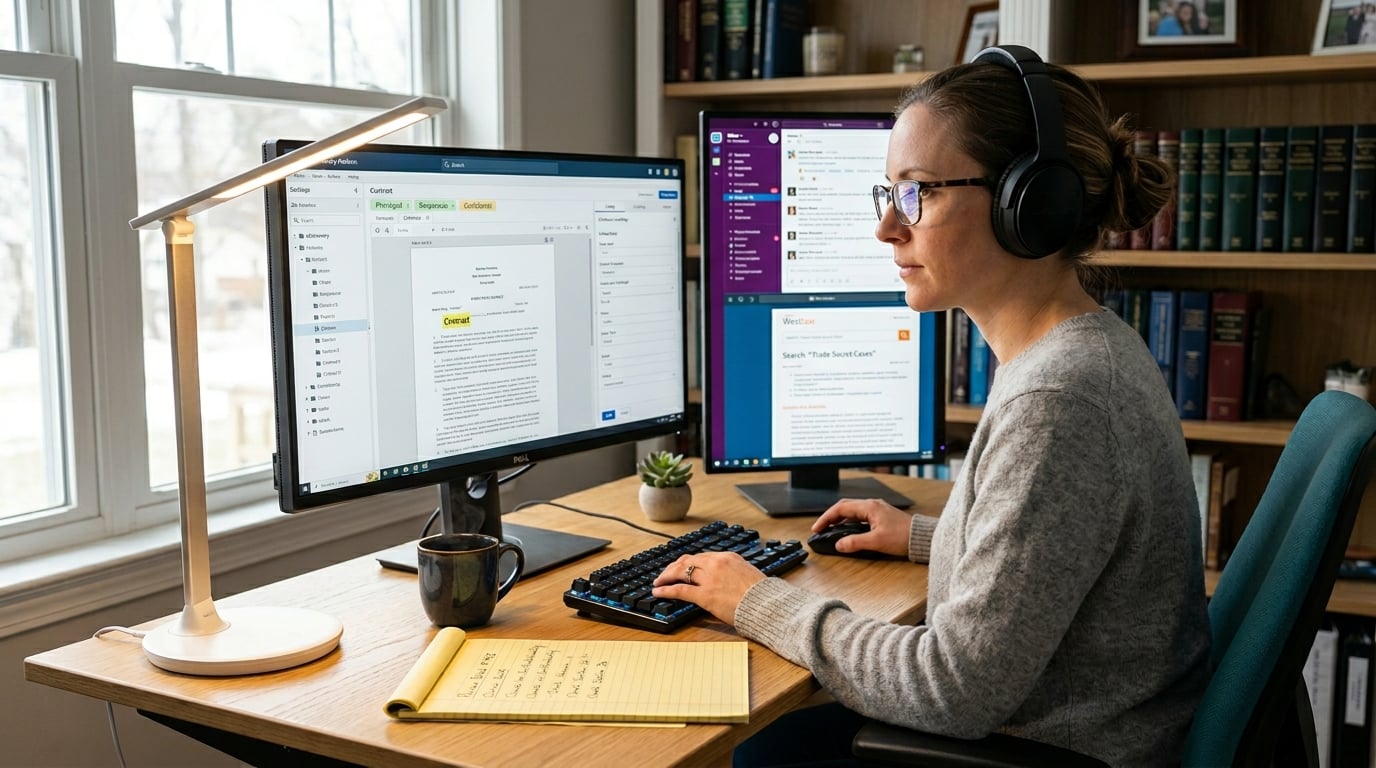
Not every position in a law firm adapted to remote work the same way. Courtroom appearances, depositions, and client meetings still require physical presence. But a large portion of legal support work moved online without much disruption. Paralegals doing research, document reviewers, eDiscovery specialists, legal IT professionals, and records managers all found that most of their work could happen from anywhere with a reliable internet connection.
Reviewing legal staffing trends to watch in 2025 makes clear that demand for these remote-capable roles has grown consistently. C&M Legal Search specializes in placing qualified candidates in exactly these positions, for both permanent and temporary needs.
Onboarding Remote Hires Is a Different Skill Set
Hiring the right person is one challenge. Getting them up to speed when they’re working remotely is another. The informal learning that comes from sitting near experienced colleagues doesn’t happen automatically on a video call.
Firms that handle remote onboarding well tend to have documented processes, scheduled check-ins during the first few months, and tools that help new hires feel connected before isolation sets in. Firms that skip that structure often see higher turnover in the first 90 days. It’s one of the less-discussed aspects of remote hiring, but it directly affects whether a strong hire stays.

Getting Your Hiring Strategy Right
The firms navigating remote hiring well share a few consistent habits. They define roles precisely before posting. They move quickly because candidates in a wider market have more options and don’t wait long. They communicate expectations about remote or hybrid work from the first conversation.
Looking at ways to improve your law firm’s hiring strategy from the candidate’s perspective makes a real difference. How a firm handles its hiring process is often the first real impression someone gets of its culture. When candidates can’t walk into the office and form their own opinions, that process carries more weight than it used to.
If your firm is adapting to today’s remote legal hiring market or looking to build a stronger support team, connect with C&M Legal Search for expert guidance tailored to your firm’s specific hiring goals.
Where Legal Hiring Goes From Here
Remote work didn’t just change where people do their jobs. It changed what candidates expect, how firms compete for talent, and what makes an offer worth accepting. The legal hiring market today is more flexible, more national, and more candidate-driven than it was five years ago. Firms that respond to those shifts with a clear and intentional strategy will have a meaningful advantage. The change has already happened, and how you approach hiring now determines whether you keep up or fall behind.